Winter leaks tend to show up at the worst time: after a big snowfall, during a thaw, or in the middle of the night. In Randolph, where snow can sit on the roof for weeks, a leak may be caused by ice rather than a hole, and the repair has to wait for the right conditions.
If your roof leaks in winter, contain the water inside, stay off the roof, and call a roofer for a temporary fix. Most winter leaks come from ice dams, damaged flashing or wind-lifted shingles, and the permanent repair is made on the first dry, workable day.
What should I do first?
First, protect the inside: put a bucket under the drip, move furniture and electronics, lay down towels and turn off power to any light fixture near the water. Then photograph the ceiling and the damage for your records and your insurer.
If the ceiling is sagging with water, a small hole in the lowest point lets it drain into a bucket in a controlled way instead of letting the drywall give out. Check the attic if it's easy to get to; wet insulation can be pulled back so it doesn't hold water against the ceiling.
Is it an ice dam or a hole in the roof?
It's likely an ice dam if the leak shows up near an outside wall during a thaw, with ice or icicles along the eaves. A leak beside a chimney, skylight or vent during rain points to flashing or an opening in the roof.
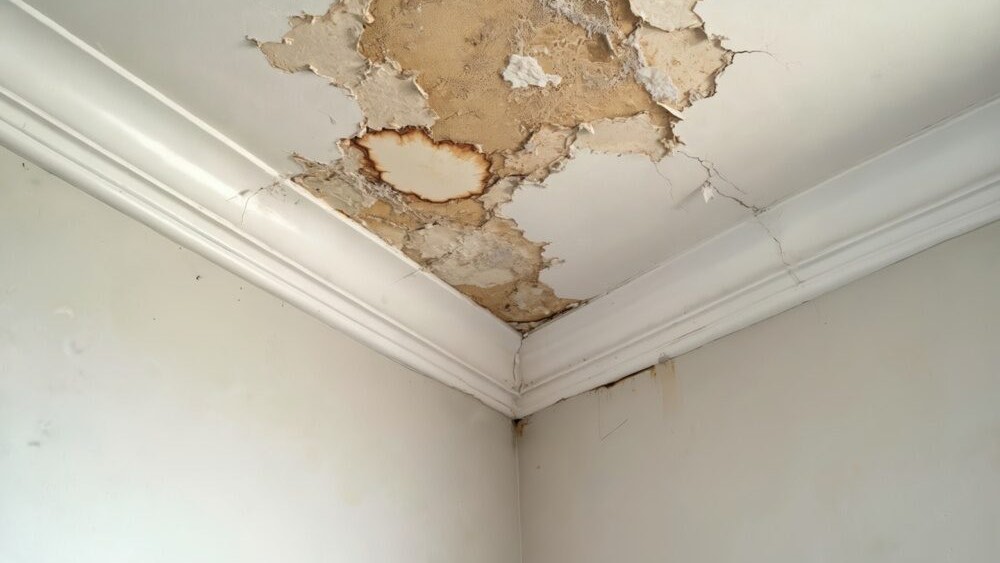
Ice dam leaks often stop once the weather turns cold again and start again with the next thaw. Leaks from damaged flashing or missing shingles usually happen whenever it rains or snow melts, regardless of ice.
What can be done in the middle of winter?
In the middle of winter, a roofer can usually clear snow from the problem area, open a channel through an ice dam, replace missing shingles with hand-sealed ones and secure loose flashing. If conditions are too icy, a tarp or temporary seal stops the water until it's safe.
Shingles installed in the cold don't seal on their own, so each one is sealed by hand with roofing adhesive. Flashing can be replaced in most weather. Larger repairs and full replacements are scheduled for milder days.
What shouldn't I do?
During a winter leak, don't climb on the roof, chip at ice or spread salt on the shingles, and don't put the repair off until spring. Each of those either risks injury or turns a small repair into a bigger one.
- Don't climb onto a snowy or icy roof.
- Don't chip at ice with a hammer, shovel or ice pick. It breaks shingles.
- Don't use rock salt on the roof; it can damage metal and plants below.
- Don't wait for spring if water is coming in. Damage to insulation and drywall adds up fast.
How do I keep it from happening again?
To keep a winter leak from happening again, fix the cause, not just the drip: seal attic air leaks and improve ventilation to prevent ice dams, add ice and water shield at the eaves when the roof is replaced, and keep gutters clear before winter.
Our guide to snow and wind on hilltop roofs explains the fixes in detail. If water is coming in now, call (973) 221-4537 or read about roof repair in Randolph.
Need help with this in Randolph?
We'll take a look and give you a free written quote. Learn more about roof repair in Randolph.