Randolph's land rises from about 550 feet to more than 1,100 feet above sea level, and the higher neighborhoods notice it every winter. Snow tends to hang around longer on north-facing slopes, and the wind that crosses the hills hits exposed roofs harder than it does down in sheltered valleys.
Snow and wind on Randolph's higher ground cause two main roof problems: ice dams at the eaves when snow sits for weeks, and shingles that lift or tear off in strong gusts. Ice and water shield, a cold, well-vented attic and high-wind nailing prevent most of the damage.
How do ice dams form?
Ice dams form when heat leaking from the living space warms the roof deck, melting the bottom layer of snow. The water runs down to the overhang, which is colder because it sits outside the walls, and freezes there into a ridge that traps more water behind it.
That trapped water can back up under shingles that were made to shed water, not hold it. The first sign inside is often a stain along the top of an outside wall or around a window frame, usually after a long cold stretch followed by a thaw.
What stops ice dams from coming back?
Ice dams stop coming back when the attic stays cold and the eaves are protected. That means sealing gaps where house air leaks into the attic, adding insulation, keeping soffit vents open and running a ridge vent, plus ice and water shield along the lower roof edge.
Air sealing usually does more than anything else. Recessed lights, bathroom fans that vent into the attic, the attic hatch and gaps around plumbing stacks all leak warm air. Fixing those, then making sure cold air can flow in at the soffits and out at the ridge, keeps the underside of the roof close to the outdoor temperature. The ice and water shield is the safety net if a dam does form anyway.
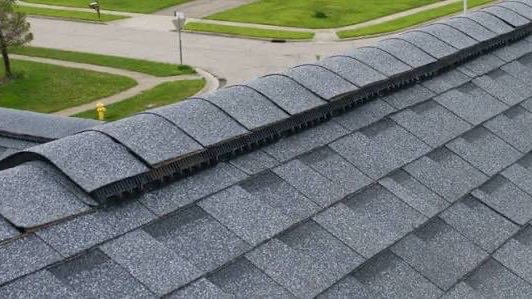
Heat cables and raking snow off the lower few feet of roof help in a pinch, but they treat the symptom. Never chip ice off a roof with a hammer or shovel; it destroys the shingles.
Why do shingles blow off on windy hills?
Shingles blow off on windy hills when their adhesive strip has weakened with age or never sealed, or when they were nailed too high or with too few nails. Wind gets under the edge, lifts the tab and eventually tears it free.
Roofs on the higher streets toward Mount Freedom and around Shongum take more of that. After a strong storm, walk the yard and look for shingle pieces, and check the ridge from the ground for caps that are missing or flipped. A few lost shingles are a quick repair, as long as they're replaced before the next rain.
How should a roof be built for hilltop weather?
A roof built for hilltop weather uses ice and water shield at all eaves and valleys, shingles rated for high winds and nailed to the manufacturer's high-wind pattern, starter strips with adhesive at every edge, and balanced attic ventilation from soffit to ridge.
None of these items is unusual, but quotes don't always include them. When you compare estimates, look for each one by name. We list them on every Randolph estimate so you can see what you're paying for.
What should I do after a big storm?
After a big storm, check the roof from the ground and the attic from inside, take photos of any damage, and call for an inspection. Don't climb onto a wet, snowy or icy roof yourself.
- Look from the ground. Stay off a snowy or icy roof.
- Check the attic for wet insulation or drips.
- Photograph any damage before cleaning up, for insurance.
- Call for a free inspection if anything looks out of place.
Seeing wind or ice damage? Read about roof repair in Randolph or request a free inspection.
Need help with this in Randolph?
We'll take a look and give you a free written quote. Learn more about roof repair in Randolph.