Census figures count about 1,800 Randolph homes built in the 1990s alone, more than any other decade except the 1970s. A lot of them still have the roof the builder put on. Those roofs are now roughly 27 to 36 years old, past the design life of most shingles sold at the time.
A Randolph home built in the 1990s is ready for its first new roof when the original shingles curl, crack or shed granules, or when leaks start near vents and walls. Most builder roofs from that era were rated for 20 to 25 years, so many are already living on extra time.
Here's what to look for, why first replacements bring a few surprises, and what to budget.
What did builders put on roofs in the 1990s?
Builders in the 1990s mostly installed three-tab or early laminated asphalt shingles over felt paper, often with little or no ice barrier at the eaves and limited attic ventilation. That combination ages faster in cold, snowy winters.
The shingles themselves were thinner than today's architectural products. Many homes got roof vents or gable vents rather than a continuous ridge vent, and soffit intake was sometimes blocked by insulation. Without steady airflow, the attic gets hot in summer and damp in winter, and both conditions shorten a roof's life.
What are the signs it's time?
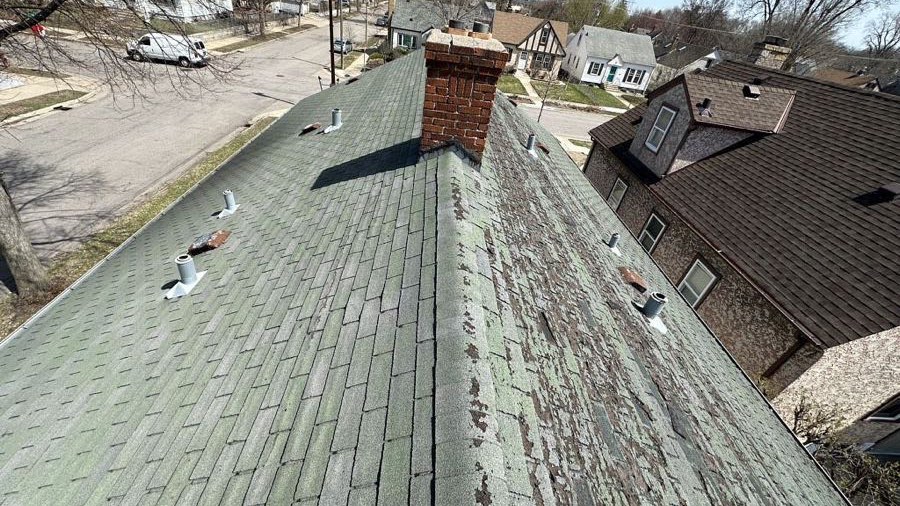
It's time for a new roof when shingle edges are curling or cupping, tabs are cracked or missing, granules collect in the gutters and downspouts, dark patches appear where granules are gone, or you find water stains in the attic around vents and chimneys.
Walk around the house with binoculars on a bright day. South- and west-facing slopes usually look the worst, since they take the most sun. Inside, check the attic after a heavy rain for damp decking or rusty nail tips. Rusty nails mean warm, moist air is condensing under the roof, a ventilation problem worth fixing with the new roof.
What changes when the original roof comes off?
When the original roof comes off, the deck is inspected for the first time in decades, missing ice barrier is added at the eaves and valleys, flashing is replaced, and ventilation is brought up to current standards. Those upgrades are where a first replacement differs most from the original.
Most 1990s homes have plywood or OSB decking, which is generally in decent shape unless there's been a long leak. Expect a few sheets to need replacing around old vents, skylights or chimneys. We price that per sheet in advance so the total doesn't climb after tear-off. Skylights from the same era are often due too, and replacing them during the roof job costs far less than doing it later.
How much does a first replacement cost?
A first roof replacement on a 1990s Randolph colonial usually costs $9,500 to $17,000, depending on size, pitch and how many dormers, valleys and skylights it has. Bigger two-story homes with complex roofs can run higher.
The roof cost calculator gives a quick range from your footprint. For a firm figure, the free inspection measures every slope and checks the attic. If the roof still has a few good years, we'll say so and quote any repairs instead.
Should I replace gutters and skylights at the same time?
Replacing gutters and skylights at the same time as the roof is usually worthwhile if they're the same age, because the drip edge, gutter and skylight flashing all tie into the new roof. Doing them later means disturbing the new shingles.
Gutters from the 1990s are often 5-inch sectional gutters with seams that have started to drip. If yours are, it makes sense to price new seamless gutters along with the roof.
Thinking about it? Request a free inspection, or read more about roof replacement in Randolph.
Need help with this in Randolph?
We'll take a look and give you a free written quote. Learn more about roof replacement in Randolph.